How to Evaluate Communication and Coordination During Crew Assessments

When you evaluate pilots, you’re not just checking procedures or stick‑and‑rudder skills. You’re watching how two people work together in a confined, high‑stakes environment where clarity, timing, and coordination directly affect safety. A strong crew communication assessment helps you see how pilots actually behave in real‑time—how they talk, how they listen, how they challenge, and … Read more

Technical Evaluation Scoring

Technical Evaluation Scoring

Rubrics for Consistent Aviation Hiring Decisions Technical assessments can improve aviation hiring, but only when employers evaluate the results consistently. Two interviewers can hear the same answer and reach very different conclusions. One may reward confidence, another may value caution, and a third may focus on whether the candidate used the terminology common at a … Read more

Aircraft Dispatcher Technical Assessment

Aircraft Dispatcher Technical Assessment

What Employers Should Evaluate An aircraft dispatcher certificate establishes that a candidate has met a recognized body of knowledge and practical standards. It does not show how effectively that person can manage the pace, complexity, and operational priorities of a particular carrier. Previous experience helps, but titles and years alone do not reveal how a … Read more

Aircraft Maintenance Skills Assessments

Aircraft Maintenance Skills Assessments

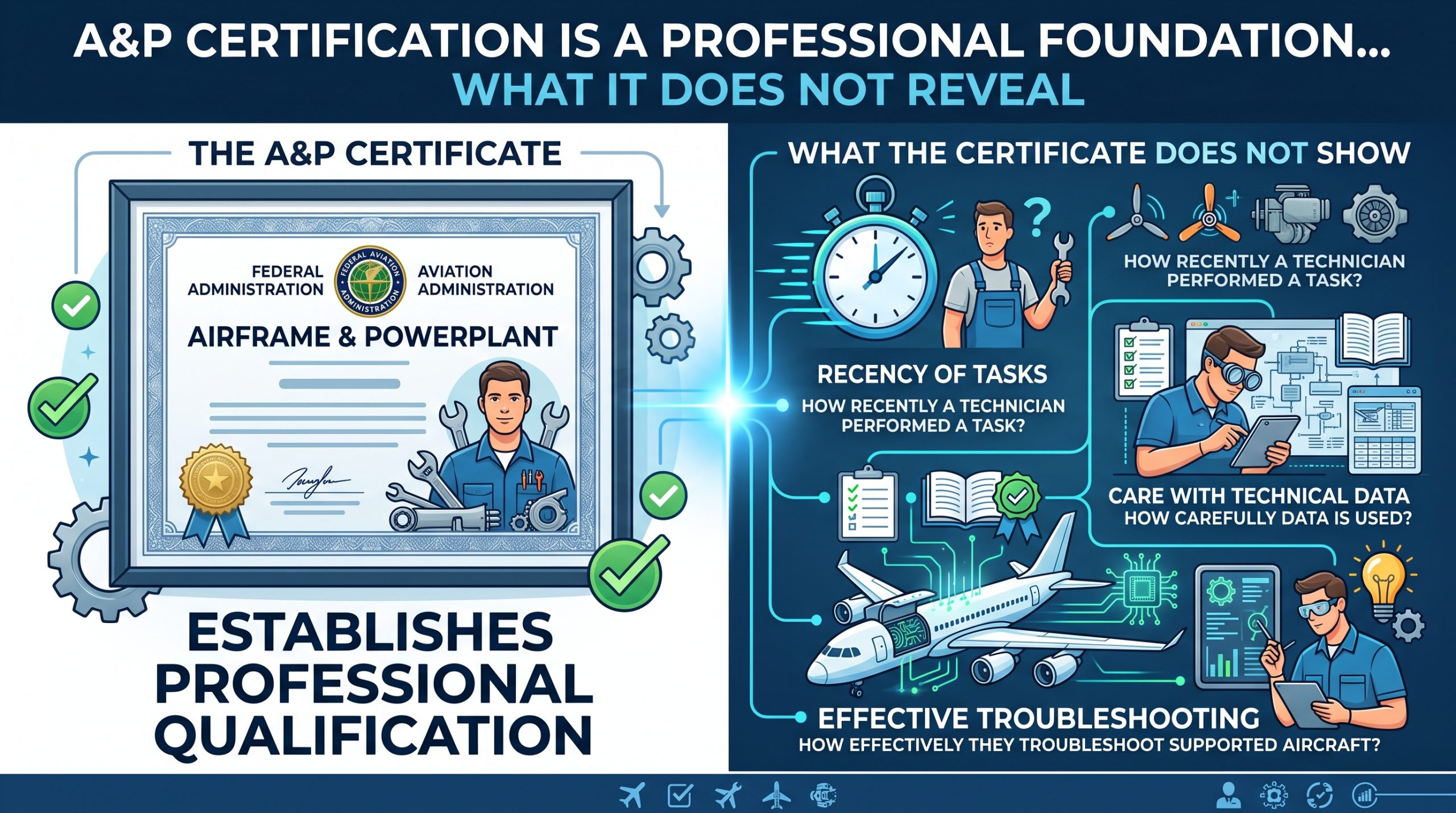
Evaluating Technician Competence An airframe and powerplant certificate establishes an important professional qualification. It does not tell an employer how recently a technician has performed a particular task, how carefully that person uses technical data, or how effectively the person can troubleshoot a problem on the aircraft the organization supports. An aircraft maintenance skills assessment … Read more

Pilot Technical Evaluation

Pilot Technical Evaluation

Measuring Knowledge Beyond Certificates and Flight Time A pilot certificate tells an employer that the applicant met an established standard at a particular point in time. Flight time shows how much experience the person has accumulated. Type ratings, previous positions, and training records add useful context. None of them, by themselves, show how well a … Read more

How to Design Role-Specific Aviation Technical Assessments

Role-Specific Technical Assessments

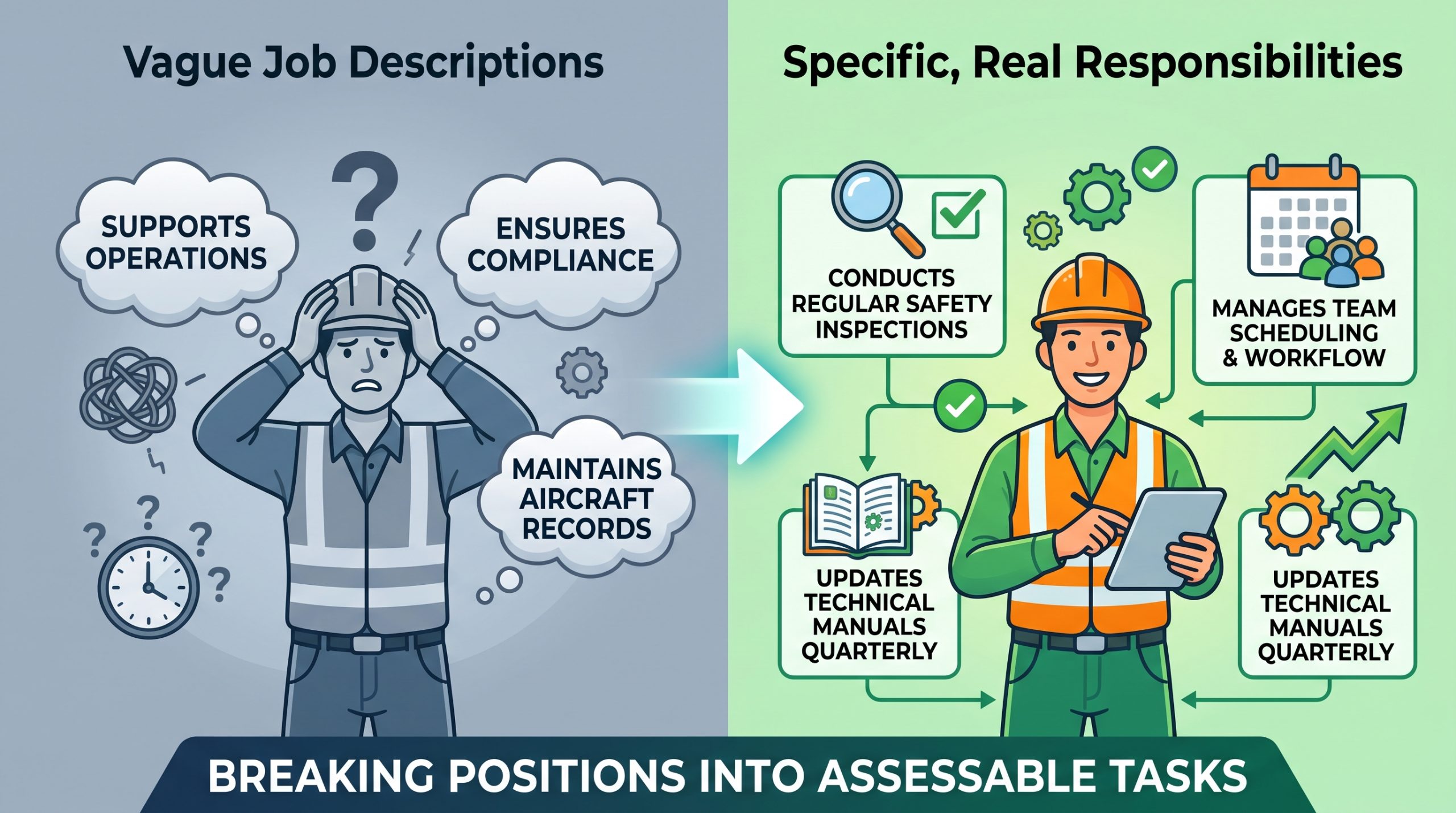
The easiest technical assessment to create is usually a list of questions someone already has on file. It may cover regulations, terminology, aircraft systems, or general industry knowledge. It may even look professional. That does not mean it measures the right things. Useful aviation technical assessments begin with the work, not the test. Before writing … Read more

Aviation Technical Evaluations

aviation technical evaluations

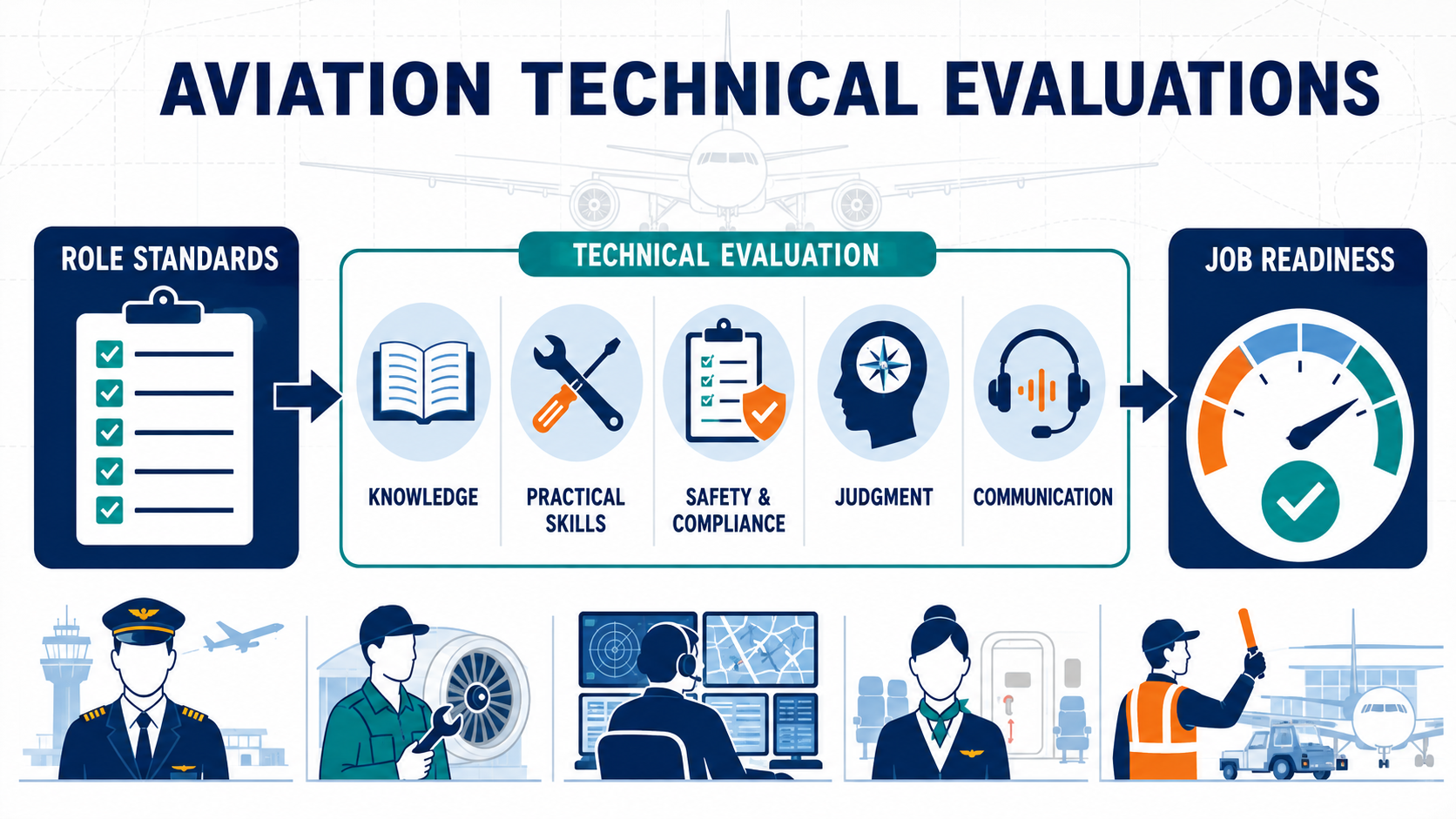
How Employers Measure Job Readiness A résumé tells an employer what a candidate has done. An interview helps explain how that person thinks, communicates, and approaches responsibility. Neither one, however, fully answers the question that matters most during aviation hiring: Can this person perform the work safely and effectively in our operation? That is the … Read more

Behavioral Interview Matrices

Behavioral Interview Matrices

A Structured Approach to Aviation Hiring Aviation employers cannot afford to base hiring decisions on instinct alone. A candidate may possess the required certificates, technical qualifications, and work experience yet still lack the judgment, communication skills, reliability, or professional discipline required for the position. Behavioral interview matrices help employers evaluate these less visible qualities through … Read more

How to Build a Competency‑Based Aviation Interview

Competency‑Based Aviation Interview

Aviation hiring has always demanded more than a polished résumé and a confident handshake. Whether you’re evaluating pilots, dispatchers, mechanics, or operations personnel, the real question is simple: Can this person perform safely, consistently, and professionally when the environment becomes dynamic? That’s why more operators are adopting the competency‑based aviation interview, a structured method that … Read more

Aircraft management: flight crew hiring

Aircraft management flight crew hiring

Aircraft Management and Flight Crew Hiring: Structuring Compliant Crewing Agreements Navigating the operational landscape of business aviation requires aircraft owners to delegate daily administration to professional operators. However, when an aircraft management company steps in to source, train, and oversee captains, first officers, and cabin attendants, a complex legal relationship unfolds. Aircraft management flight crew … Read more

Crew Qualification and Duty Assignment

Crew Qualification and Duty Assignment

Modern Standards for Safe and Compliant Flight Operations In every professional flight department—whether operating under Part 135, Part 121, or a corporate aviation structure—the process of crew qualification and duty assignment is the backbone of safe operations. Before a pilot, technician, or operational specialist enters active rotation, management must verify that every regulatory, training, and … Read more

Aviation Salary Transparency

Aviation Salary Transparency

The commercial aviation sector continues to experience unprecedented operational transformations as industry stakeholders evaluate compensation frameworks, career progression pathways, and long-term economic stability for professional flight crews across the globe. For decades, pilot compensation structures remained shrouded in institutional complexity, heavily fragmented across regional carriers, corporate flight departments, and major international airlines. Today, however, the … Read more

Designing an Aviation Hiring Responsibility Matrix

Aviation Hiring Responsibility Matrix

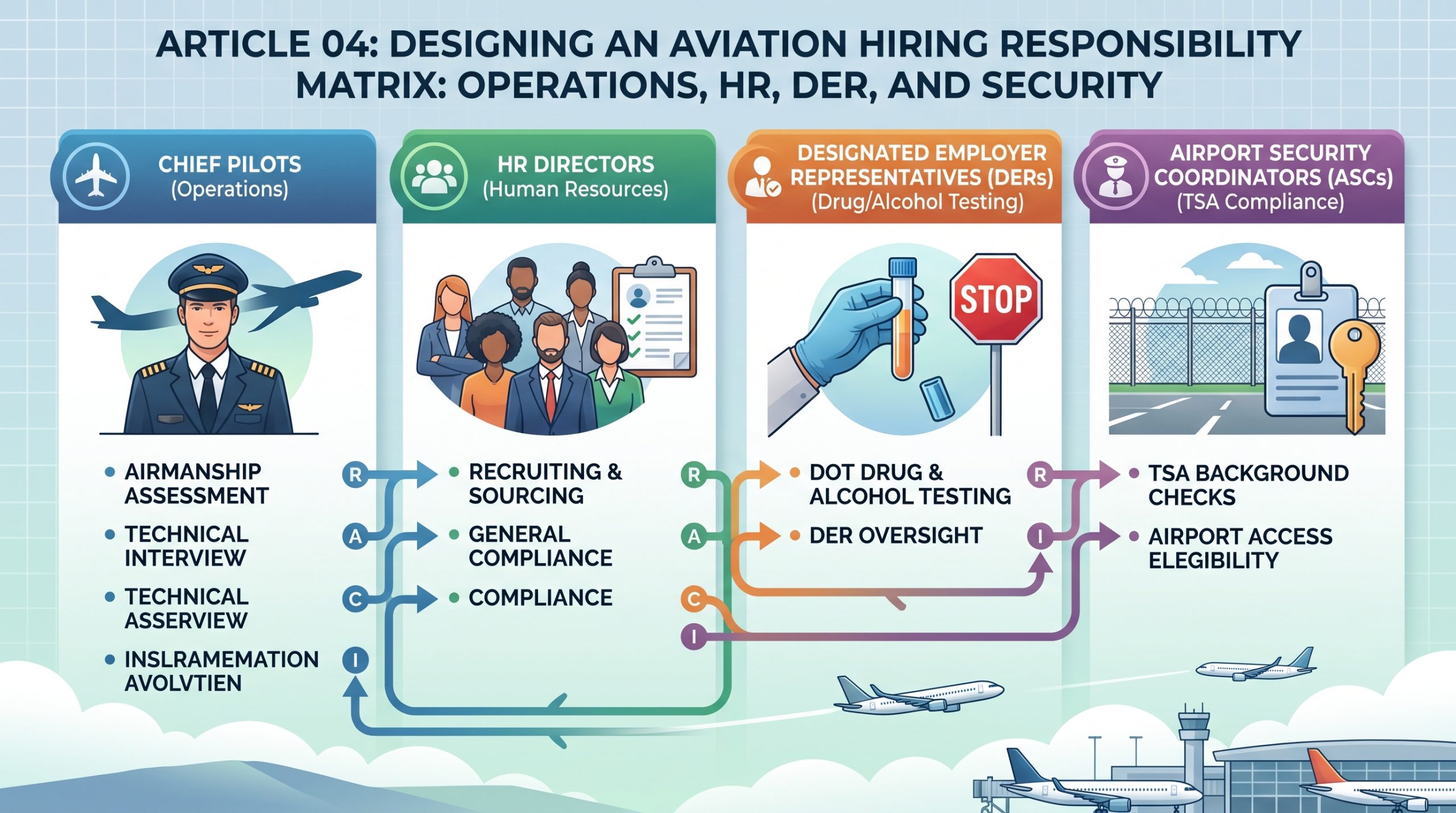
Operations, HR, DER, and Security Considerations In commercial, charter, and business aviation flight departments, talent acquisition is an operational safety function governed by complex federal mandates. Unlike conventional corporate hiring, onboarding an airman, maintenance technician, or flight dispatcher requires navigating rigorous multi-agency regulatory frameworks. In this high-stakes environment, a single compliance oversight can compromise an … Read more

Aviation Operational Risk: Pre-employment Vetting

Aviation Operational Risk

When an aircraft incident or accident occurs, the post-event investigation rapidly expands beyond mechanical telemetry, maintenance logs, and weather conditions to scrutinize the flight crew’s entire professional history. In subsequent wrongful death and civil litigation, plaintiff attorneys focus heavily on the operator’s hiring practices under the legal doctrine of negligent hiring and retention. The Doctrine … Read more

Regulatory Compliance Agencies

regulatory compliance agencies

Regulatory Compliance Agencies: Navigating Inter-Agency Jurisdictional Overlaps Aviation talent acquisition does not operate within a single, unified administrative framework. Instead, every air carrier, corporate flight department, repair station, and airport service provider operates at the complex intersection of multiple governing bodies. When building an operational onboarding pipeline, understanding the statutory reach of all aviation hiring … Read more

8 Aviation Hiring Gates: Establishing a Bulletproof Pre-Employment Pipeline

8 Aviation Hiring Gates

In commercial and corporate aviation, hiring is never a simple human resources transaction. Every hiring action is both an operational-risk determination and a binding regulatory compliance event. While a standard corporate enterprise assesses culture fit, baseline competency, and administrative background clearances, an aviation operator must navigate a complex web of multi-agency mandates governed by the … Read more

Part 145 Repair Station pre-employment requirements

Part 145 Repair Station pre-employment requirements

Vetting Technicians, Inspectors, and Repairmen In commercial aviation, the safe operation of an aircraft begins long before pushback—it is forged on the hangar floor. Under 14 CFR Part 145, a certified repair station holds a tremendous public trust. The airworthiness of commercial airliners, corporate jets, and regional aircraft depends entirely on the technical competency, legal … Read more