How to Become an Aircraft Mechanic

Becoming an Aircraft Mechanic in the U.S. (2025)
The two main pathways
Path 1: “Earn-while-you-learn” without an A&P (yet)
Many people start as a mechanic helper or apprentice at an FBO, GA shop, Part 145 repair station, or airline hangar. You perform maintenance under the supervision of a certificated mechanic or repairman (hands-on, in-person supervision is required), gradually building the “documented practical experience” the FAA demands before it will authorize you to test. This route is paid employment and can be ideal if you can’t afford full-time school right now. eCFRFederal Aviation Administration

What the FAA requires (experience):
To be eligible to test for a mechanic certificate, you must show either 18 months of practical experience in Airframe or Powerplant or 30 months of concurrent experience covering both Airframe and Powerplant. Experience must be real maintenance on aircraft/articles with the tools, materials, and practices of the trade; an FAA inspector will review your proof (logbooks, pay stubs, letters from supervisors, task sign-offs). GovInfoFederal Aviation Administration
A note on supervision:
Under 14 CFR 43.3(d), non-certificated people may perform maintenance only while supervised by a certificated mechanic/repairman who is personally observing to the extent necessary and readily available in person (recent FAA interpretations have emphasized that “remote supervision” via video doesn’t meet the rule). Plan on in-person oversight as you accrue experience. eCFRAviation International NewsAOPA
Typical entry pay while you accrue time:
Real-world examples vary by market. Airline apprentice programs advertise ~$17/hr starting with step-ups and a jump after you earn A&P (e.g., Kalitta Air: $17/hr as apprentice; $26/hr minimum once A&P is issued). Aggregators show national helper/apprentice ranges roughly $18–$23/hr. Expect higher in hot markets/union shops. kalittaair.comZipRecruiter+1
Pros & cons of the OJT route
-
Pros: You’re earning; you learn real shop rhythms; some employers help with exam prep and DME access; no big school tuition.
-
Cons: Takes longer (18–30 months); your experience must be well-documented; you still pay for the FAA tests; early pay is modest; you must proactively ensure your task mix will satisfy the FAA.
Path 2: Part 147 Aviation Maintenance Technician (AMT) school → A&P
Attend an FAA-approved Part 147 program (community college, technical college, or private AMT school). Modernized rules emphasize Airman Certification Standards (ACS) outcomes over seat-time; most programs still run ~18–24 months full-time and integrate General, Airframe, and Powerplant curricula. Graduates present the school’s completion document in lieu of experience to sit for the tests. GovInfo
Examples of duration:
Programs commonly list ~19–24 months (e.g., WSU Tech “~2 years,” Epic Flight Academy “19 months”). Your local community college may offer an associate degree option in the same timeframe. Epic Flight Academy
What it costs (tuition & tools):
Tuition varies dramatically by state and school type—roughly $8k–$12k per year at many public colleges (resident rates) up to $25k–$40k total at some private schools. Tools are a real cost most students under-estimate: school or Snap-on kits are often $2,500–$4,600+ (you keep them; they’re your starter box on the job). State Tech+1
Pros & cons of the school route
-
Pros: Structured learning; faster, cleaner path to the test; embedded labs; career services; veteran-friendly; financial-aid eligible.
-
Cons: You’re mostly not earning full-time while in school; you still pay testing fees; you’ll likely need to buy a toolkit.
Universal FAA eligibility & testing (both paths)
Eligibility (65.71): Age 18+, read/write/speak English, complete all prescribed tests within 24 months, and comply with the rating-specific sections. eCFR
Knowledge tests (65.75): Three written exams—General (G), Airframe (A), Powerplant (P)—based on the Aviation Mechanic ACS. The FAA matrix shows 100 questions, 2.0 hours per A, P, G test, 70% to pass. You can take the General early if your Part 147 school signs you off. Typical PSI testing fees run about $150–$175 per exam depending on center. GovInfoFederal Aviation AdministrationAmerican Winds
Oral & Practical (65.79): After passing the writtens, you schedule the O&P with a Designated Mechanic Examiner (DME). Pricing is set by the examiner and market; $1,300–$1,600 for a full A&P is a realistic national ballpark, though some regions are lower/higher. DMEs issue a temporary certificate upon successful completion. Federal Aviation AdministrationAircraft Mechanic Testingctaero.cttech.org
Military experience path: Qualified military maintainers can convert experience to FAA eligibility with documentation (e.g., CCAF/command letters), then follow the same testing flow. Air University
How long and how much (side-by-side)
| Route | Time to eligibility | Typical direct costs you should plan for |
|---|---|---|
| OJT (no school) | 18 months (for A or P) or 30 months (for A&P) of documented, supervised practical experience; add test scheduling time | Knowledge tests ( |
| Part 147 AMT school | ~18–24 months full-time (some 19-month programs) | Tuition/fees (widely variable, often $10k–$25k+ total at publics; higher at some privates) + tool kit (~$2.5k–$4.6k) + knowledge tests + DME O&P as above |
Sources: 14 CFR 65.77; FAA testing matrix; representative school pages and DME pricing. GovInfoFederal Aviation AdministrationEpic Flight AcademyState TechAircraft Mechanic Testing
What jobs can you get? Three big avenues.
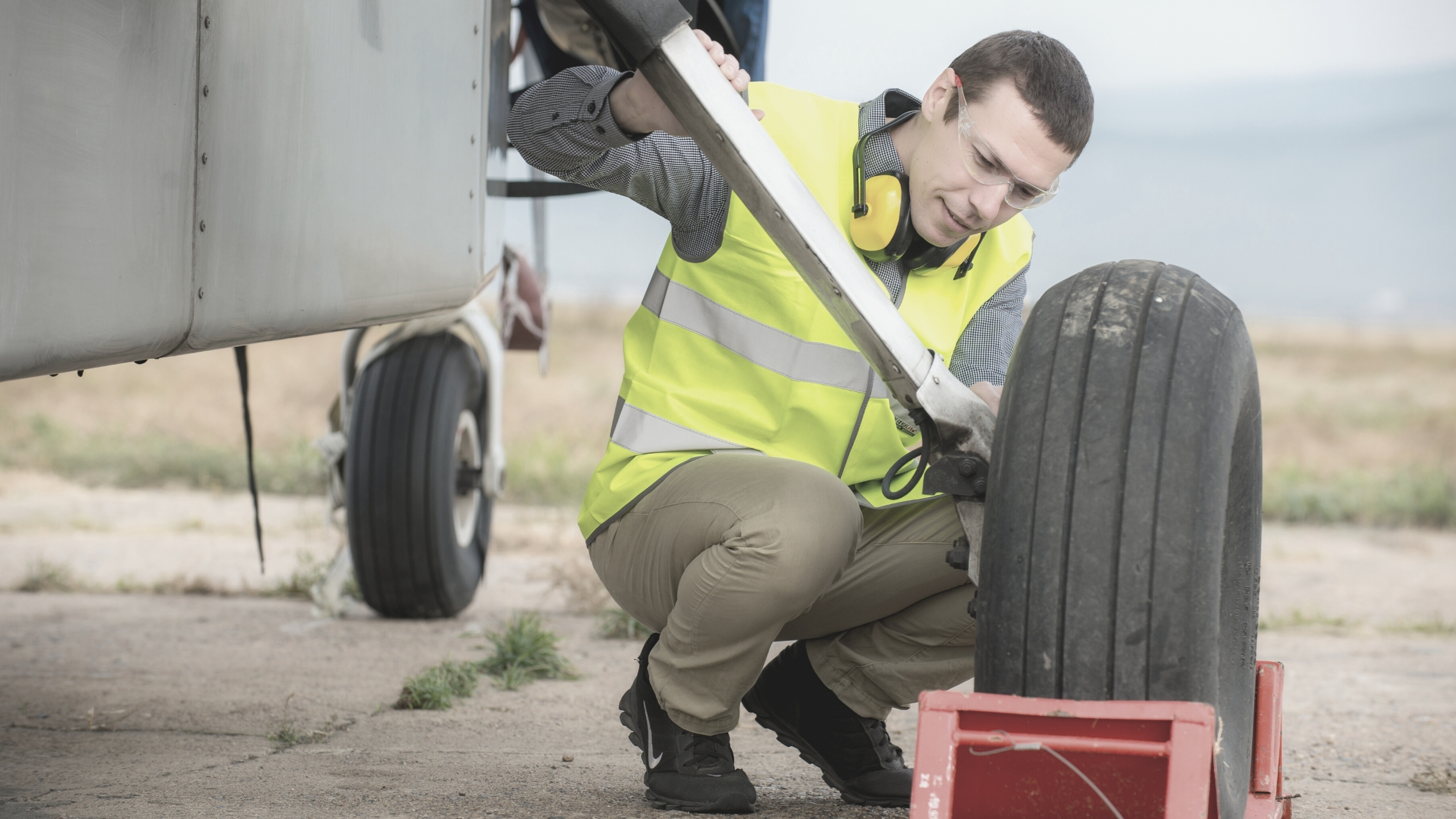
1) General Aviation (GA) shops & small FBOs
-
Work: Annuals/100-hours, troubleshooting, engines, sheet-metal and composite repairs, avionics interfacing, mods, STCs.
-
Pay: Broad range; typically lower than major airlines but varies by market and specialty (structures, avionics, turbine experience).
-
Upside: Variety, autonomy, customer contact, faster path to lead/IA in some locales.
-
Reg/ops backdrop: You’ll live in Part 43 (maintenance), Part 91 customers, and manufacturer data—plus airworthiness directive (AD) compliance.
2) Part 145 Repair Stations (MROs & component shops)
-
Work: Heavy checks, engine/APU/landing gear overhauls, composites, NDT, interiors, avionics bench work, component repair.
-
Pay: Often competitive, with premiums for night shift, inspection, NDT, avionics bench, or structures.
-
Pros: Structured QA, global customers, strong documentation culture; pathways to Repairman authorization for specialized roles.
-
Reg/ops backdrop: Part 145 quality manuals, ratings, capability lists, calibrated tooling, and repair station release procedures. eCFRFederal Aviation Administration
3) Part 121 Airlines (line & base maintenance)
-
Work: Line (troubleshooting, MEL/deferrals, turn checks) and base (mods, C-checks).
-
Pay & benefits: Highest median wages are in air transportation; BLS 2024 shows median $95,320 for mechanics in air transportation (sector median), versus lower medians in support activities. Major-airline contracts add shift differentials, license premiums, tool allowances, travel privileges, and strong overtime opportunities. Bureau of Labor Statistics
How much do A&Ps make in 2025?
-
National medians:
-
Aircraft mechanics & service techs: $78,680 (May 2024 median).
-
Avionics technicians: $81,390 (May 2024 median).
-
The upper decile for mechanics exceeds $120,000. Bureau of Labor Statistics
-
-
By industry (mechanics):
-
Air transportation (airlines): median $95,320
-
Aerospace manufacturing: $82,560
-
Support activities for air transportation (many GA/MRO): $66,960. Bureau of Labor Statistics
-
-
Apprentice to post-A&P examples:
-
Airline apprentice programs: ~$17/hr starting; $26/hr+ after A&P (example: Kalitta Air). kalittaair.com
-
Reality check: Unionized majors frequently exceed the medians once you factor top-of-scale base rates plus differentials; published contract materials (AA, UA, AS, etc.) show all-in hourly rates that can crest $55–$65+/hr at top scale, with premium adders for nights/holidays/lead/inspection and OT. twu-iam-association.orgInternational Brotherhood of TeamstersBureau of Labor Statistics
What remuneration should you expect (beyond the base rate)?
-
Shift differentials: Extra pay for evenings, nights, weekends, holidays (contract-specific). Bureau of Labor Statistics
-
License/skill premiums: Adders for holding the A&P, avionics bench qualifications, composites, NDT, CDL, etc. (varies by employer/contract). twu514.org
-
Tool allowance: Annual/monthly stipends to offset personal-tool investment (e.g., $400–$1,200/yr; examples in contracts and job postings). ATD 142dommagazine.comairwis.com
-
Travel benefits: Airline travel privileges (for you/family) at many carriers. airwis.com
-
Overtime & per diem: Frequent in base-mod cycles, AOG support, or heavy-check environments. (Employer policy/contract-specific.)
-
Education/tuition help: Some airlines/MROs offer tuition assistance, AMT school partnerships, or IA prep support.
Quality of life: what’s great—and what’s hard
Perks
-
Tangible craftsmanship: You fix real machines, sign your name, and watch them fly.
-
Mobility: Skills transfer across GA, Part 145, and Part 121; opportunities worldwide.
-
Stable demand: The fleet needs maintainers; aviation’s long-term tech shortage keeps pressure on wages and hiring.
-
Travel & variety: Line maintenance is dynamic; MRO specialties let you go deep (structures, engines, avionics, NDT).
Challenges
-
Schedules: Nights, weekends, holidays, and on-call are common; 24/7 ops is the norm. Bureau of Labor Statistics
-
Environment: Hangars and ramps mean noise, weather exposure, awkward postures, and FOD vigilance; injury risk is managed but real. Bureau of Labor Statistics
-
Documentation & compliance: Tight paperwork, procedures, and QA—especially in Part 145/121—are part of the job. eCFR
-
Tools & currency: You’ll keep investing in tools/training over time; staying current on manuals, ADs, and new systems is continuous. State Tech
Planning your route: practical checklists
If you want to start without an A&P (OJT)
-
Target employers willing to mentor: GA shops, Part 145 MROs, regional/major airlines with apprentice programs. Ask explicitly about documenting your tasks/hours for FAA eligibility. kalittaair.com
-
Understand supervision: Your work must be in-person supervised by a certificate holder to count and to be legal. eCFR
-
Keep records from day one: Task matrix, dates, sign-offs, supervisor letters—make it easy for the FAA to verify your 18/30-month experience. Federal Aviation Administration
-
Budget for testing: Set aside $1.7k–$2.2k for three writtens + O&P, plus any prep course you choose. American WindsAircraft Mechanic Testing
If you want to go the Part 147 school route
-
Visit programs: Compare total cost (tuition + fees + tools), completion rates, employer ties, and whether they schedule DMEs on-site.
-
Financial aid: Explore FAFSA, state grants, VA benefits, and tool-discount programs (e.g., Snap-on education programs). sep.snapon.com
-
Timeline: Plan for ~19–24 months; some schools offer accelerated terms. Epic Flight Academy
-
Test strategy: Take the writtens near graduation and book a DME promptly to keep momentum. GovInfo
Leveling up after you’re a certificated A&P
-
Inspection Authorization (IA): After 3 years holding A&P and 2 years actively engaged in maintenance, you can seek an IA to sign annuals and major repair/alteration returns. IAs renew by activity or training under §65.93. eCFRFederal Aviation Administration
-
Specializations: Avionics/bench, composites, structures, engines/APU, NDT, interiors, planning/QC, maintenance control.
-
Repairman (Part 145): Some specialized roles at repair stations are filled by repairmen (employer-limited privileges). O*NET OnLine
Frequently asked realities
-
Do I really need to buy my own tools?
In GA and many airlines, yes—at least a core set. Schools list starter kits around $2,500–$4,600; employers often provide tool allowances to help. State Techairwis.com -
How soon can I hit $80–$100k?
With overtime and/or a major-airline or high-demand MRO role, many mechanics reach that range within a few years; BLS shows the top 10% >$120k nationally. Bureau of Labor Statistics -
What about working outside in bad weather?
Line maintenance often means ramps and midnight shifts; MRO base work is more indoor/steady. Choose the environment that fits your lifestyle. Bureau of Labor Statistics
Closing thoughts
Both paths are legitimate and respected. If you need to earn right away, the OJT path works—just be rigorous about supervised task documentation and plan ahead for testing. If you can invest ~2 years full-time, a strong Part 147 program offers a faster, more structured runway to your A&P and a smooth handoff to employers.
Either way, you’re entering a craft with pride, responsibility, and real upward mobility—especially if you continue to specialize and pursue your IA when eligible.